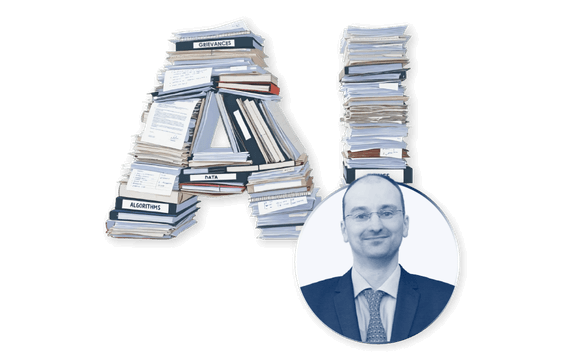
The rise of AI‑generated grievances and Tribunal claims

Recent research suggests that around 60% of UK businesses have encountered employee grievances they believe were generated using AI, and one in three HR teams have seen AI used in preparing Employment Tribunal claims.
From our own experience, this reflects a significant increase rather than an emerging trend. AI‑assisted grievances and claims are now a regular feature of the employee relations landscape.
Employees are increasingly using AI tools to understand their employment rights, sense‑check workplace issues and draft formal complaints. While this shift brings new challenges for employers, it’s important to recognise that it’s not inherently negative.
In many cases, AI is helping employees articulate concerns more clearly and engage with internal processes they may previously have found inaccessible. However, it can also fuel unrealistic expectations and contribute to early escalation if not handled carefully.
Why employees are turning to AI
Employment law is complex, and for many employees it feels difficult to navigate without professional support. AI tools offer immediate, plain‑English guidance on issues such as unfair dismissal, discrimination, whistleblowing, pay, or flexible working. For employees who would not ordinarily approach a solicitor or union representative, AI provides a readily available starting point.
AI is also being used as a confidence‑building tool. Employees often feel uncertain about whether their experience is “serious enough” to raise formally. AI can validate those concerns, giving individuals reassurance that what they are experiencing could amount to a grievance. This can encourage engagement with internal processes rather than disengagement or resignation without raising issues.
Drafting support is another key driver. Grievances and tribunal claims prepared with the assistance of AI are often more structured and legally framed than those seen historically. Allegations are typically grouped under clear headings, linked to protected characteristics, and supported by references to legislation or ACAS guidance. While AI does not replace legal advice, it can help employees present their concerns in a clearer and more organised way.
On-demand webinars | AI, Grievances & Tribunals Series
AI is changing the way employees raise workplace concerns, and HR teams need to be ready.
In this three-part webinar series, our experts will explore how AI is influencing grievances, formal processes and Employment Tribunal claims, with practical guidance on how to respond fairly, confidently and defensibly.
Watch the full series on demand to learn how to manage AI-influenced complaints before they escalate.
Not always a bad thing
The increase in AI‑generated grievances and tribunal claims should not automatically be seen as a problem for employers. In many cases, AI helps employees frame the fundamentals of their case, making it clearer what is being alleged, which events are relied upon, and what outcome is being sought.
This clarity can make investigations more focused and effective, allowing employers to identify relevant witnesses, locate key documents, and address issues directly rather than trying to interpret poorly articulated complaints. Clearer grievances can also support procedural fairness, helping ensure that the employee’s position is properly understood and responded to. In this sense, AI can raise the quality of engagement on both sides.
The risks: unrealistic expectations and “AI certainty”
Despite these benefits, there are clear risks employers need to be alert to. AI tools are designed to give confident answers and can often tell users what they want to hear. As a result, employees may be given overly optimistic assessments of their legal position or unrealistic views about compensation, remedies, or the likelihood of success at tribunal.
We are increasingly seeing AI‑assisted grievances and tribunal claims that:
- Assert legal conclusions as fact before an investigation has taken place.
- Rely heavily on legal terminology without sufficient factual evidence.
- Set out outcomes that are disproportionate to the issues raised or go beyond what a tribunal could realistically award.
This can harden positions at an early stage, making constructive resolution more difficult. Employees may subsequently feel frustrated or misled when legal advice, or the reality of the process, tempers expectations created by AI.
Is AI adding pressure to the Tribunal system?
There is increasing discussion about whether AI is contributing to pressure on the Employment Tribunal system. By lowering the barrier to entry, AI makes it easier for employees to progress from an internal grievance to a formal claim. Issues that might previously have stalled due to lack of confidence or drafting ability are now more likely to proceed.
However, it would be overly simplistic to suggest AI is the main cause of tribunal backlogs. Ongoing resourcing challenges, systemic delays, and post‑pandemic caseloads remain the primary drivers. AI may be increasing the number of claims at the margins, but it is also bringing unresolved workplace issues to light.
What employers should be aware of
Employers should assume that AI‑assisted complaints are now part of the landscape and adapt their approach accordingly.
Key considerations include:
- Do not dismiss a grievance simply because it appears AI‑generated; the substance of the concerns is what matters.
- Focus investigations on facts and evidence rather than legal labels or conclusions set out by AI.
- Use early, clear communication to manage expectations about process, timescales, and potential outcomes.
- Be mindful of tone. Employees using AI may feel emboldened but also anxious, and a defensive response can escalate matters unnecessarily.
- Ensure employer documentation is clear, structured, and well‑reasoned. AI has raised the standard of employee drafting, and employer responses must keep pace.
Looking ahead
AI is not going away, and its role in employment disputes will continue to evolve. Used well, it can support engagement, clarity, and better‑structured conversations. Used uncritically, it can inflate expectations and entrench disputes.
The challenge for employers is not to resist this trend, but to respond with clarity, fairness, and realism, ensuring that AI supports better outcomes rather than more contentious ones.
Further advice and support
If you would like tailored guidance on how to manage AI‑generated grievances or Employment Tribunal claims – whether that is strengthening your grievance process, supporting managers to respond confidently to legally framed complaints, or helping to manage expectations at an early stage – our team is here to help.
We can also provide practical advice on handling complex or high‑risk grievances, reducing the likelihood of escalation to tribunal, and ensuring your investigations and outcomes remain fair, proportionate and legally defensible.
For personalised support aligned to your organisation’s needs, please contact our Advice Line on 0345 073 0240 (option 2), where one of our advisers will be happy to assist.